Understanding Ocean Metabolism on a Changing Planet
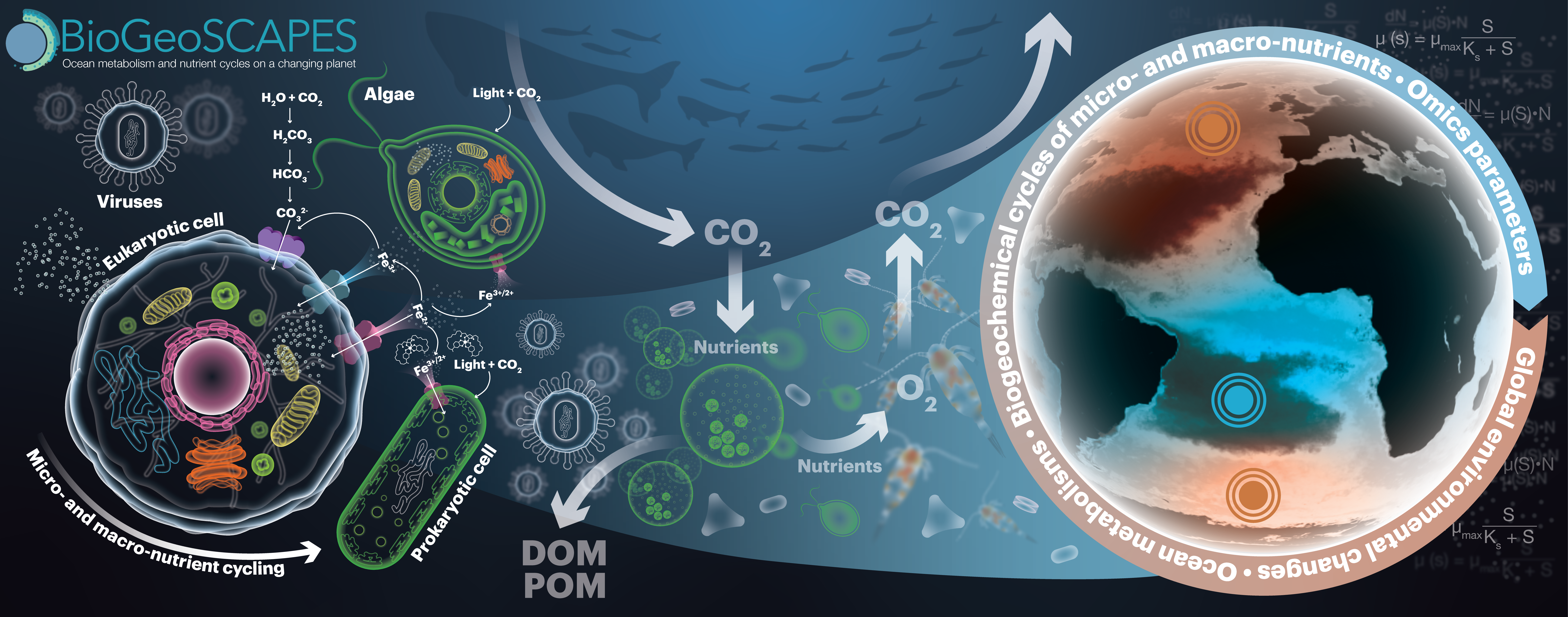
BioGeoSCAPES is an international research program seeking to understand how microbial metabolisms shape ocean biogeochemical cycles and how these interconnected processes respond to environmental change. The program brings together omics, biogeochemistry, process studies, data science, and modeling across regional to global scales.
Through coordinated and interoperable research, BioGeoSCAPES will connect the identities and functions of marine microorganisms with the biogeochemical processes they influence.
Why BioGeoSCAPES?
Microbial communities underpin Earth’s life-support system by transforming and recycling essential elements throughout the ocean. Yet major gaps remain in our understanding of the organisms, metabolisms, and environmental controls that regulate these cycles. Filling these gaps is necessary to understand how the ocean functions today and how it may respond to future environmental changes.
Three interconnected scientific themes
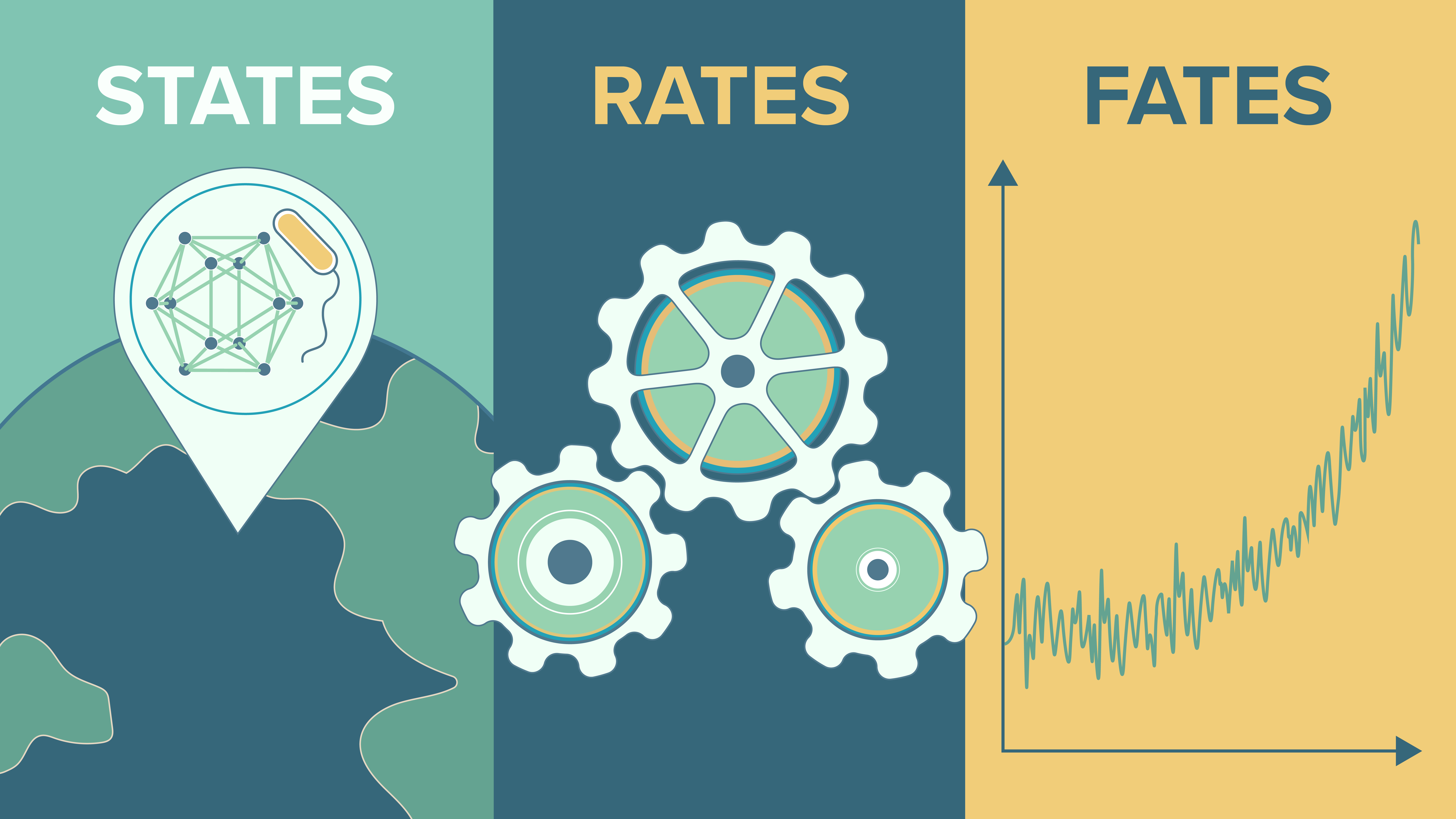
The BioGeoSCAPES Science Plan organizes the program’s research around three complementary themes that connect the distribution, activity, and future of microbial metabolisms in the ocean.
STATES: mapping key ocean metabolisms over space and time to generate 4-D maps of the abundances of key microbes and microbial biogeochemical processes and their drivers
RATES: mechanisms connecting microbial metabolisms and productivity to biogeochemical cycles to build a conceptual framework for the links between microbial ecology and biogeochemical cycles
FATES: predicting interactions with environmental factors to provide risk and vulnerability assessments for key ocean metabolisms on a changing planet
The BioGeoSCAPES Science Plan
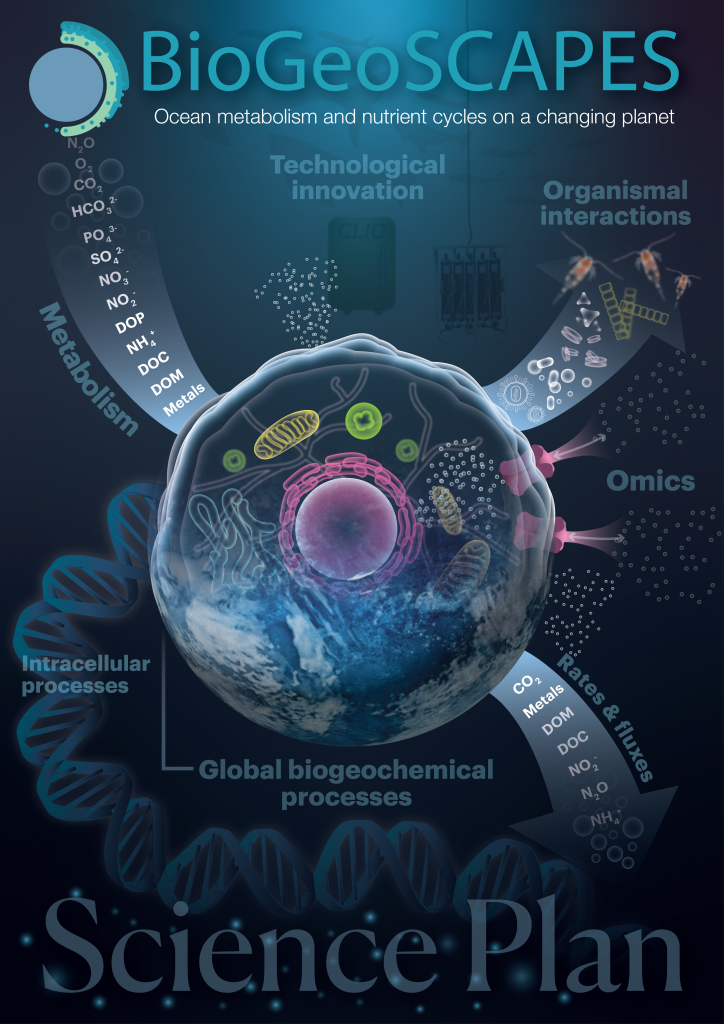
Developed collaboratively by more than 60 authors from 16 nations, the BioGeoSCAPES Science Plan establishes a shared scientific vision for understanding ocean metabolism and its connections to biogeochemical cycles. It brings together the STATES, RATES, and FATES themes with cross-cutting priorities for international collaboration, standardization, data integration, modeling, and capacity development.
The Science Plan has undergone multiple rounds of internal community review and external review by the Scientific Committee on Oceanic Research (SCOR). We look forward to sharing the completed Science Plan publicly very soon.
The Path to Implementation
The Science Plan outlines a phased approach that begins with community coordination and shared infrastructure, progresses through pilot studies and coordinated global observations, and culminates in modeling, synthesis, and long-term program transition.
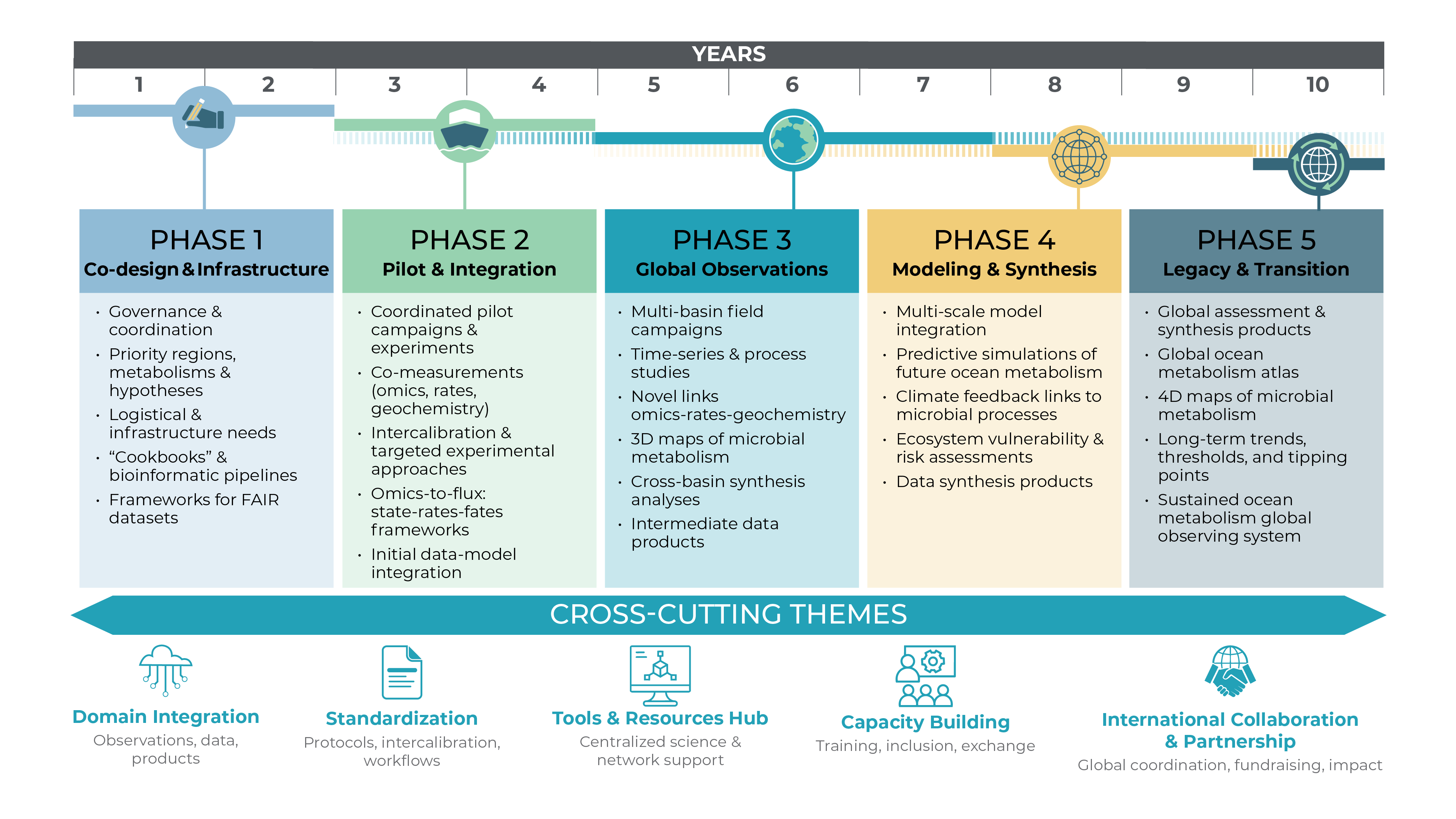
Built through international collaboration
BioGeoSCAPES has developed through a bottom-up, community-driven process involving researchers from nations and scientific disciplines around the world. Workshops, working groups, community consultations, and collaborative writing have shaped both the program’s scientific priorities and its approach to implementation.
A community-driven history
BioGeoSCAPES grew from international discussions about connecting rapidly advancing omics approaches with ocean biogeochemistry, biological processes, and ecosystem modeling.
Scientific scoping, international network building, national consultations, the 2023 International Science Planning Workshop, and collaborative development of the Science Plan have prepared BioGeoSCAPES to transition from planning to implementation.
The role of AccelNet BioGeoSCAPES
Support from the U.S. National Science Foundation’s Acceleration of Networks program has enabled the international coordination needed to develop BioGeoSCAPES.
AccelNet supports workshops, working groups, research exchanges, capacity development, communications, and other collaborative activities that build the program’s scientific and organizational foundations. It does not directly fund BioGeoSCAPES scientific research.
Governance and Coordination
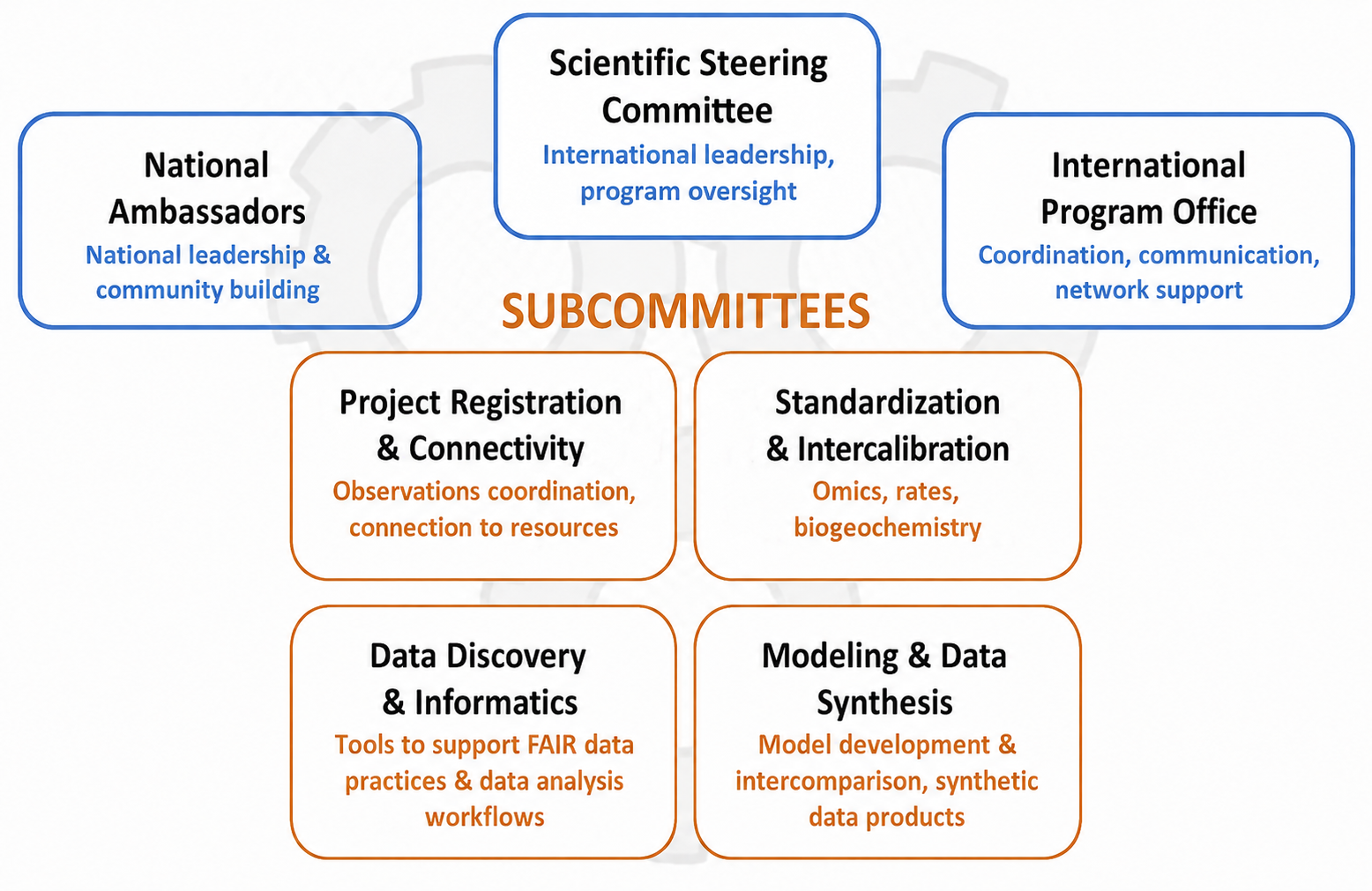
BioGeoSCAPES is guided by an international governance structure that connects program-wide leadership with grant-supported planning, scientific working groups, and focused subcommittees. This structure supports international coordination, broad community participation, and the transition from scientific planning to program implementation.
International Implementation Committee
BioGeoSCAPES is currently guided by the International Implementation Committee, comprising 22 members from 18 nations. The committee supports the program’s transition from scientific planning to implementation. In late 2026, it will transition to a formal Scientific Steering Committee that will provide international scientific leadership, strategic direction, and program oversight.
Explore Our Community in Action
BioGeoSCAPES working groups translate shared priorities into coordinated action, while our capacity development programs expand access to training, professional networks, and collaborative opportunities for early-career researchers worldwide. Explore these areas to learn more about the people and activities advancing the program.
Working Groups
Explore the teams coordinating activities in areas including data integration, modeling, standardization and intercalibration, and community engagement.
Capacity Development
Learn about our efforts to support early career researchers worldwide and expand access to training, mentorship, professional networks, and collaboration.
Join the BioGeoSCAPES Community
BioGeoSCAPES welcomes researchers, institutions, programs, and partners from around the world. Share your work, introduce your organization, join our mailing list, and learn about new opportunities to participate.